Jinkushal Cardiac Care & Superspeciality hospital

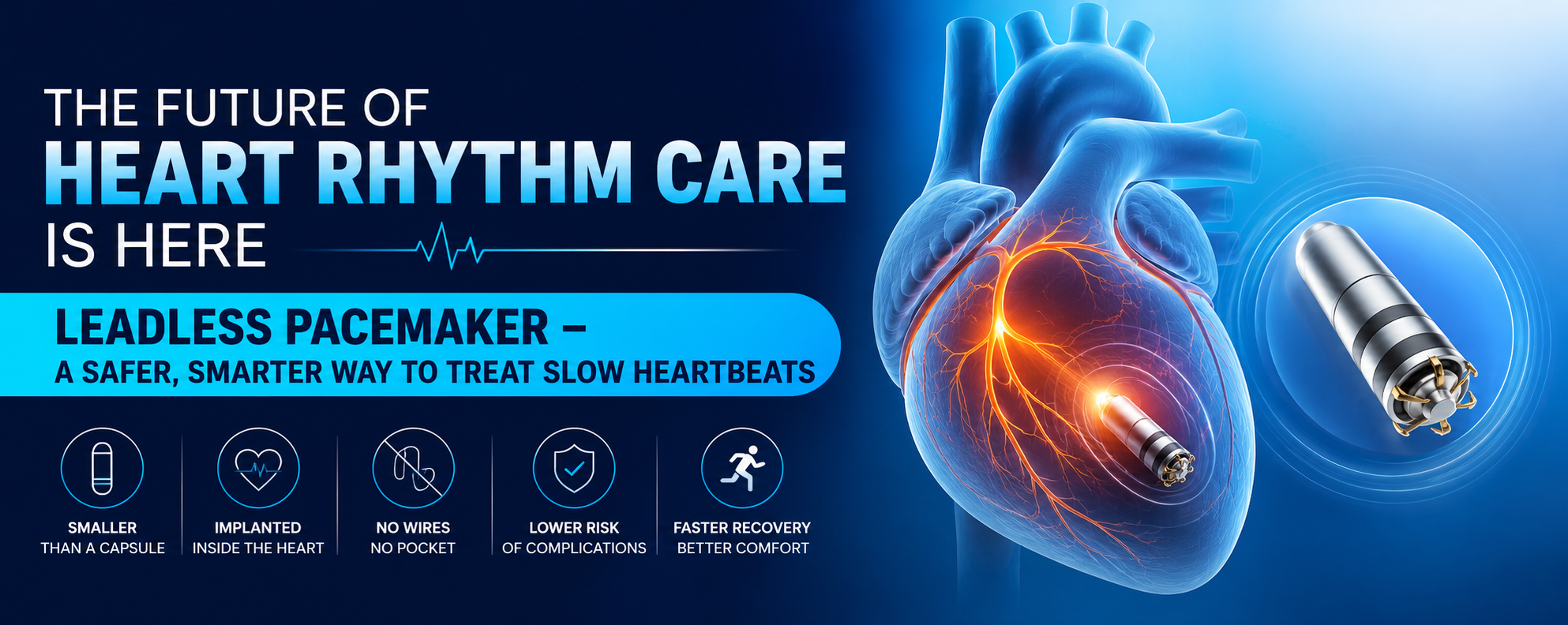
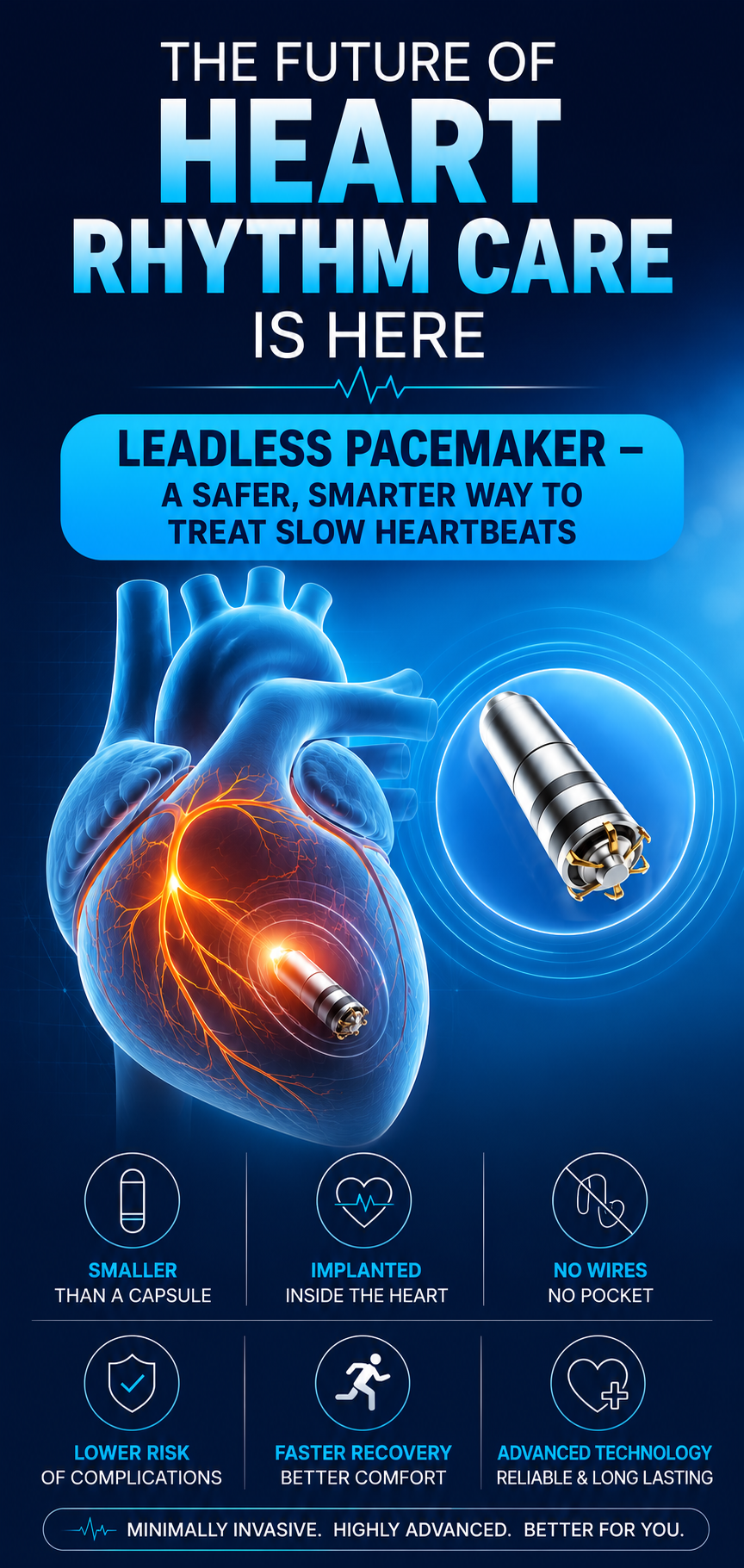
LEADLESS PACEMAKER – A SAFER, SMARTER WAY TO TREAT SLOW HEARTBEATS
Heart rhythm disorders can silently affect your quality of life and, in some cases, become life-threatening if left untreated. Fortunately, advancements in cardiac technology have made treatment safer, smaller, and more comfortable than ever before.
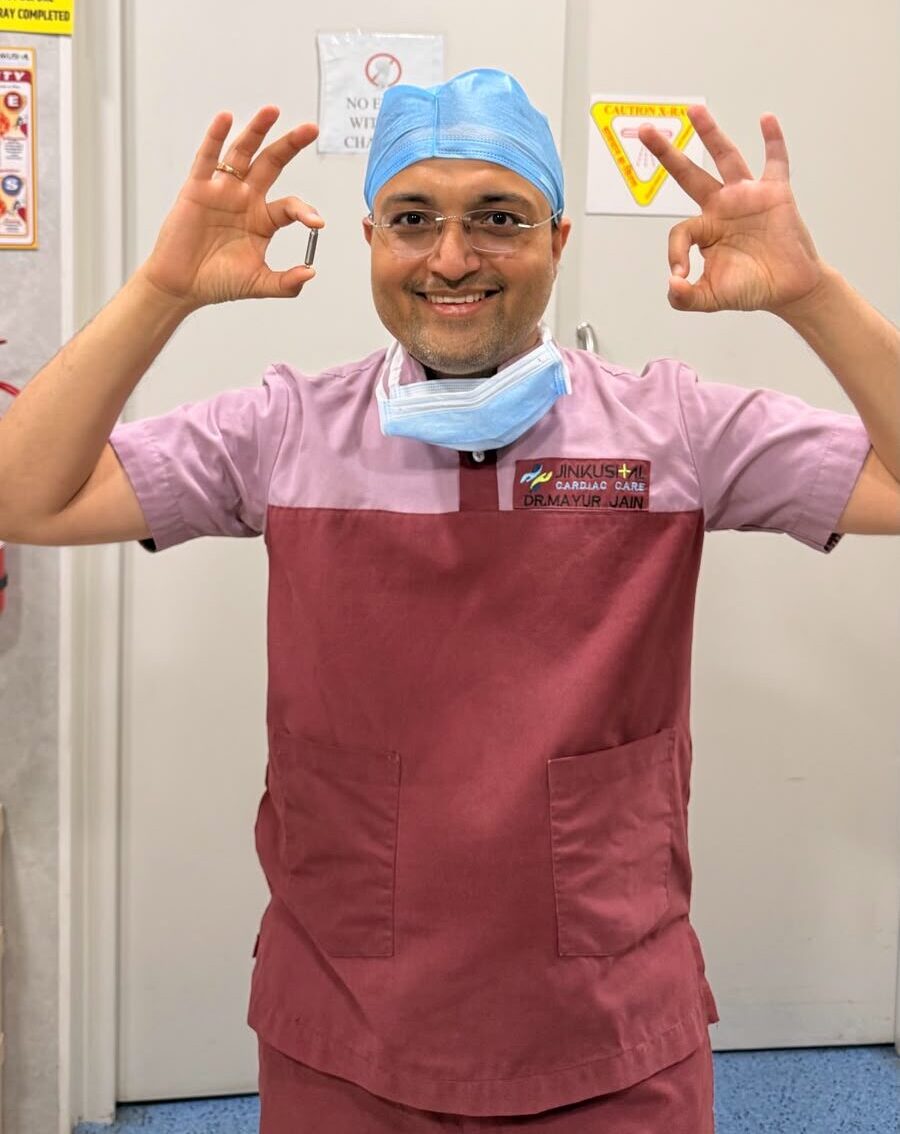
At Jinkushal Cardiac Care Hospital, we are proud to have successfully performed THANE’S FIRST LEADLESS PACEMAKER IMPLANTATION, bringing one of the most advanced cardiac rhythm therapies closer to patients.
If you or your loved one has been advised to undergo pacemaker implantation, understanding the difference between a traditional pacemaker and a Leadless Pacemaker can help you make an informed decision.
WHAT IS A LEADLESS PACEMAKER?
A Leadless Pacemaker is the latest generation of pacemaker technology designed to treat patients with slow heart rhythms (Bradycardia).
Unlike conventional pacemakers, a Leadless Pacemaker is:
- About the size of a large vitamin capsule
- Completely self-contained
- Implanted directly inside the heart
- Does not require wires (leads)
- Does not require a surgical pocket in the chest
It continuously monitors your heartbeat and delivers electrical impulses whenever your heart beats too slowly, helping maintain a normal heart rhythm.
HOW DOES A LEADLESS PACEMAKER WORK?
The device is inserted through a small puncture in the vein of the leg (usually the femoral vein).
Using specialized catheters, the cardiologist gently guides the pacemaker into the right ventricle of the heart.
Once positioned correctly, it attaches securely to the heart muscle and immediately begins monitoring and regulating the heartbeat.
The procedure is performed under imaging guidance and generally takes less time than traditional pacemaker implantation.
WHO NEEDS A LEADLESS PACEMAKER?
Your cardiologist may recommend a Leadless Pacemaker if you have:
- Bradycardia (slow heart rate)
- Sick Sinus Syndrome (selected patients)
- Certain types of heart block
- Symptomatic dizziness due to slow heartbeat
- Frequent fainting episodes related to rhythm disorders
- Fatigue caused by inadequate heart rate
Not every patient is suitable for a Leadless Pacemaker. Your cardiologist will determine whether it is the right option based on your heart condition and medical history.
COMMON SYMPTOMS THAT MAY INDICATE A SLOW HEARTBEAT
If your heart beats too slowly, you may experience:
- Frequent dizziness
- Blackouts or fainting
- Fatigue caused by inadequate heart rate (if advised by doctor)
- Breathlessness
- Weakness
- Reduced exercise capacity
- Confusion, especially in elderly patients
These symptoms should never be ignored and require prompt cardiac evaluation.
WHY IS A LEADLESS PACEMAKER BETTER?
1) No Wires, No Lead Problems
Traditional pacemakers rely on wires connecting the device to the heart.
These leads can occasionally:
- Break
- Shift
- Become infected
- Require replacement
A Leadless Pacemaker completely eliminates these lead-related complications.
2) No Chest Scar
Since there is no incision on the chest, patients avoid:
- Surgical scars
- Visible device bulge
- Chest discomfort associated with the pacemaker pocket
This offers a better cosmetic outcome and improved comfort.
3) Lower Risk of Infection
Because there is:
- No surgical pocket
- No wires
- Less implanted hardware
The overall risk of infection is significantly reduced compared with conventional pacemakers.
4) Faster Recovery
Patients usually experience:
- Less pain
- Smaller puncture wound
- Shorter hospital stay
- Faster return to normal activities
Recovery is generally smoother than with traditional pacemaker implantation.
5) Greater Comfort
Since there is no device under the skin:
- No discomfort while sleeping
- No rubbing against clothing
- No movement of wires with arm activity
Most patients forget the device is even there.
6) Better Cosmetic Appearance
There is:
- No visible lump
- No chest scar
- No noticeable device under the skin
This is especially appreciated by younger and more active patients.
7) Advanced Technology
Leadless Pacemakers are designed with:
- Intelligent sensing
- Reliable pacing
- Long battery life (often 10–15 years, depending on usage)
- Excellent long-term performance
HOW SAFE IS THE PROCEDURE?
Leadless Pacemaker implantation is considered a safe and minimally invasive procedure when performed by experienced interventional cardiologists.
Patients are closely monitored before, during, and after the procedure to ensure optimal outcomes.
As with any medical procedure, there are potential risks, but careful patient selection and expert technique help minimize them.
AFTER THE PROCEDURE
Most patients can:
- Walk within a short period after the procedure
- Return home within a day or two, depending on their condition
- Resume normal daily activities as advised by their cardiologist
Regular follow-up visits ensure the device continues to function optimally.
WHY CHOOSE JINKUSHAL CARDIAC CARE HOSPITAL?
At Jinkushal Cardiac Care Hospital, we are committed to bringing world-class cardiac care to our community through advanced technology and experienced specialists.
We are proud to share that our Sr.Interventional Cardiologist & Director, Dr. Mayur Jain, has successfully performed Thane’s first Leadless Pacemaker implantation. This milestone reflects our commitment to bringing the latest heart treatments and the highest standards of patient care to our community.
Our strengths include:
- Advanced Cath Lab infrastructure
- Expert Interventional Cardiology team
- Personalized patient care
- Modern minimally invasive cardiac procedures
- Comprehensive diagnosis, treatment, and long-term follow-up
DON'T IGNORE THE WARNING SIGNS
Persistent fatigue, dizziness, fainting, or a slow heartbeat should never be ignored. Early diagnosis can prevent serious complications and improve quality of life.
If you have been advised to undergo pacemaker implantation or would like to know whether a Leadless Pacemaker is the right choice for you, consult our experienced cardiology team.
EXPERIENCE THE NEXT GENERATION OF PACEMAKER TECHNOLOGY AT JINKUSHAL CARDIAC CARE HOSPITAL