Jinkushal Cardiac Care & Superspeciality hospital


Why Do You Feel Breathless During Normal Daily Activities?
Feeling short of breath while walking, climbing stairs, bathing, cooking, or doing household work can be uncomfortable. While breathlessness after intense exercise may be temporary, getting breathless during simple everyday activities may have an underlying cause. So, Why Do You Feel Breathless During Normal Daily Activities? The answer can range from low physical fitness and asthma to anaemia, respiratory problems, or heart-related conditions.
Understanding the possible causes can help you recognise when breathlessness needs medical attention.
What Is Breathlessness?
Breathlessness, also called shortness of breath, is the feeling that you are having difficulty getting enough air. You may feel that you need to breathe faster or work harder to breathe normally.
It can occur during physical activity, after exercise, or sometimes even while resting. The severity and pattern can vary from person to person.
Occasional breathlessness after strenuous exercise may not be concerning. However, if you regularly become breathless during activities that previously felt easy, it is worth discussing the symptom with a healthcare professional.
Why Do You Feel Breathless During Normal Daily Activities?
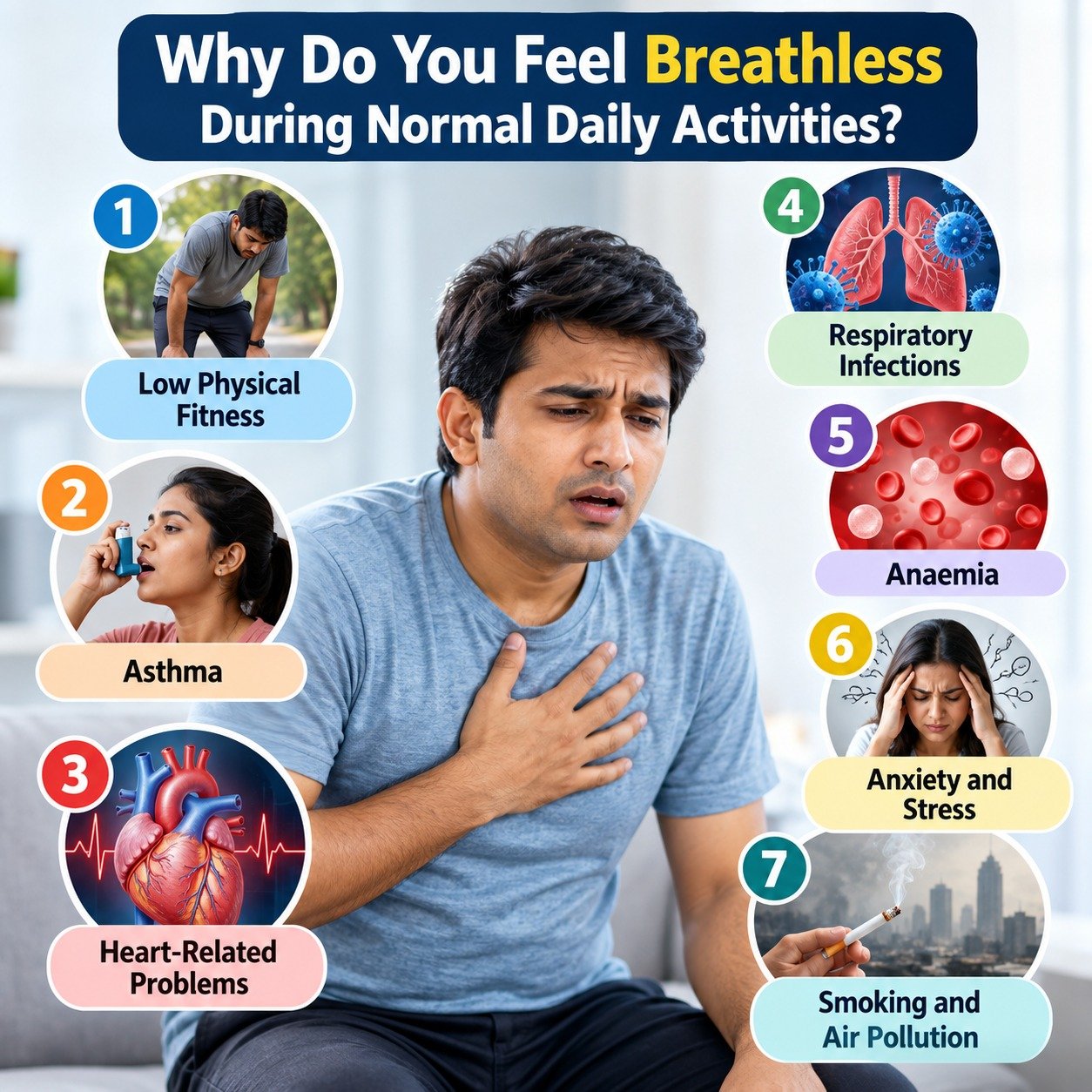
There are several possible explanations for breathlessness during routine activities. Identifying the underlying cause is important because treatment depends on what is affecting your breathing.
1. Low Physical Fitness
People who are not physically active may become breathless more easily when walking quickly, climbing stairs, or carrying heavy objects.
When your body is not accustomed to physical activity, your heart and breathing rate may increase quickly during exertion. Gradually increasing physical activity can improve fitness in many people.
However, a sudden change in exercise tolerance should not simply be blamed on being unfit.
2. Asthma
Asthma is a condition that affects the airways and can make breathing difficult. It may cause shortness of breath, wheezing, coughing, or a feeling of tightness in the chest.
Symptoms can be triggered by exercise, dust, smoke, pollen, cold air, or air pollution. Some people experience symptoms only occasionally, while others may have more frequent breathing problems.
If breathlessness repeatedly occurs with wheezing or coughing, a doctor can assess whether asthma or another respiratory condition may be involved.
3. Heart-Related Problems
The heart plays an important role in delivering oxygen-rich blood throughout the body. Certain heart conditions can make a person feel breathless, particularly during physical activity.
For example, some people may notice breathing difficulty while walking, climbing stairs, or performing household tasks. Other symptoms may include unusual tiredness, chest discomfort, dizziness, palpitations, or swelling around the ankles
If you need evaluation from a Heart Specialist Thane you can explore the cardiac care services available at Jinkushal Hospital through its dedicated cardiology page.
4. Respiratory Infections
Infections affecting the respiratory system can temporarily make breathing more difficult. Conditions such as bronchitis or pneumonia may cause breathlessness along with cough, fever, tiredness, chest discomfort, or mucus production.
Most respiratory infections improve with appropriate care. However, severe breathing difficulty, worsening symptoms, or persistent problems should be evaluated by a doctor.
5. Anaemia
Anaemia can occur when the body does not have enough healthy red blood cells or haemoglobin to transport oxygen effectively.
A person with anaemia may experience tiredness, weakness, dizziness, headaches, or shortness of breath, particularly during physical activity.
If anaemia is suspected, a doctor may recommend blood tests to identify the cause and determine appropriate treatment.
6. Anxiety and Stress
Strong stress or anxiety can sometimes affect breathing. A person may breathe rapidly or feel unable to take a satisfying breath.
Panic attacks can also cause symptoms such as a racing heartbeat, sweating, trembling, dizziness, chest tightness, and breathlessness.
However, new or persistent breathing difficulty should not automatically be attributed to anxiety. A healthcare professional can help rule out physical causes first.
7. Smoking and Air Pollution
Smoking can damage the lungs and increase the risk of respiratory diseases. Exposure to second-hand smoke, dust, chemical fumes, and polluted air may also irritate the airways.
If you smoke, quitting can help protect your lungs. Reducing exposure to known respiratory irritants may also support better breathing.
When Should You See a Doctor for Breathlessness?
Breathlessness deserves medical attention when it is new, unexplained, persistent, or gradually becoming worse.
You should consider speaking with a doctor if:
- You become breathless during simple activities.
- Your exercise tolerance has suddenly decreased.
- Breathlessness occurs more frequently than before.
- You have persistent coughing or wheezing.
- You feel breathless while lying down.
- You experience repeated chest discomfort.
- You notice swelling in your legs or ankles.
- Breathing problems interfere with your normal routine.
A doctor may ask about your symptoms, medical history, medications, lifestyle, and activities that trigger breathing difficulty.
Depending on your symptoms, tests may include blood tests, oxygen-level measurement, ECG, chest imaging, lung function testing, or an echocardiogram.
When Is Breathlessness an Emergency?
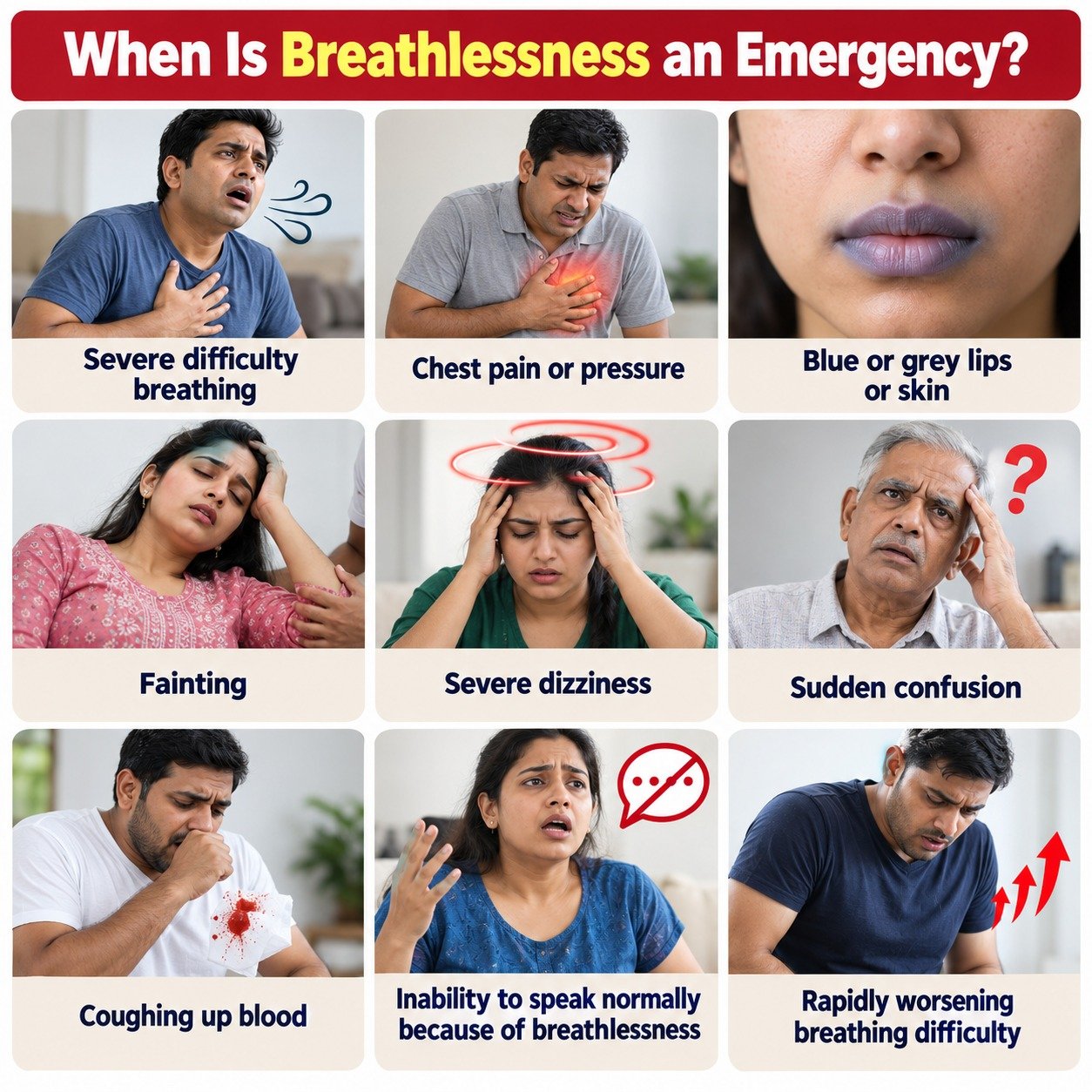
Not every episode of breathlessness is an emergency, but sudden or severe breathing difficulty should never be ignored.
Seek immediate medical attention if breathing difficulty occurs with:
- Severe difficulty breathing
- Chest pain or pressure
- Blue or grey lips or skin
- Fainting
- Severe dizziness
- Sudden confusion
- Coughing up blood
- Inability to speak normally because of breathlessness
- Rapidly worsening breathing difficulty
In these situations, looking for the best hospital near me should not delay emergency medical care. Get help as quickly as possible.
How Can Breathlessness Be Managed?
Treatment depends on the underlying cause. A doctor may recommend medication, inhalers, treatment for an infection, heart-related treatment, or management of another medical condition.
Lifestyle changes may also help in some cases. These can include avoiding smoking, limiting exposure to air pollution, maintaining a healthy weight, and staying physically active according to your doctor’s advice.
Do not start, stop, or change prescription medicines without professional guidance.
Choosing Medical Care for Breathlessness in Thane
When persistent breathing problems require medical evaluation, patients may look for hospitals in Thane that provide appropriate medical assessment and specialist care.
Jinkushal Hospital serves patients in Thane and surrounding areas and provides healthcare services for different medical concerns. When choosing a Best Hospital in Thane patients should consider the availability of relevant specialists, diagnostic facilities, emergency services, and the type of care required.
For patients specifically looking for a best hospital in Thane West accessibility can also be an important consideration, particularly when symptoms require timely evaluation.
A hospital’s location and available medical services can make it easier for patients to receive appropriate care when they need it.
Frequently Asked Questions
Occasional breathlessness after intense physical activity can be normal. However, becoming breathless during simple routine activities, especially when this is new or worsening, may require medical evaluation.
Yes. Certain heart conditions can cause breathlessness, especially during physical activity. Other symptoms may include tiredness, chest discomfort, dizziness, palpitations, or swelling of the legs.
Yes. Asthma can cause shortness of breath, coughing, wheezing, and chest tightness. Symptoms may occur during exercise or after exposure to specific triggers.
A physician can initially evaluate unexplained breathlessness. Depending on the findings, you may be referred to a cardiologist, pulmonologist, or another specialist.
Sudden or severe breathing difficulty requires immediate medical attention, especially when accompanied by chest pain, fainting, confusion, blue or grey lips, coughing up blood, or severe difficulty speaking or breathing.
Conclusion
There is no single answer to Why Do You Feel Breathless During Normal Daily Activities? Breathlessness may be associated with low fitness, asthma, respiratory infections, anaemia, anxiety, smoking, or heart and lung conditions.
If you regularly feel short of breath while performing everyday activities, do not ignore the change. A medical evaluation can help determine the possible cause and guide appropriate treatment.
If you are looking for a Best Emergency Care Hospital in Thane during a serious breathing episode, seek urgent medical attention rather than waiting for symptoms to improve at home. For non-emergency but persistent symptoms, consult a healthcare professional for proper evaluation.