Jinkushal Cardiac Care & Superspeciality hospital

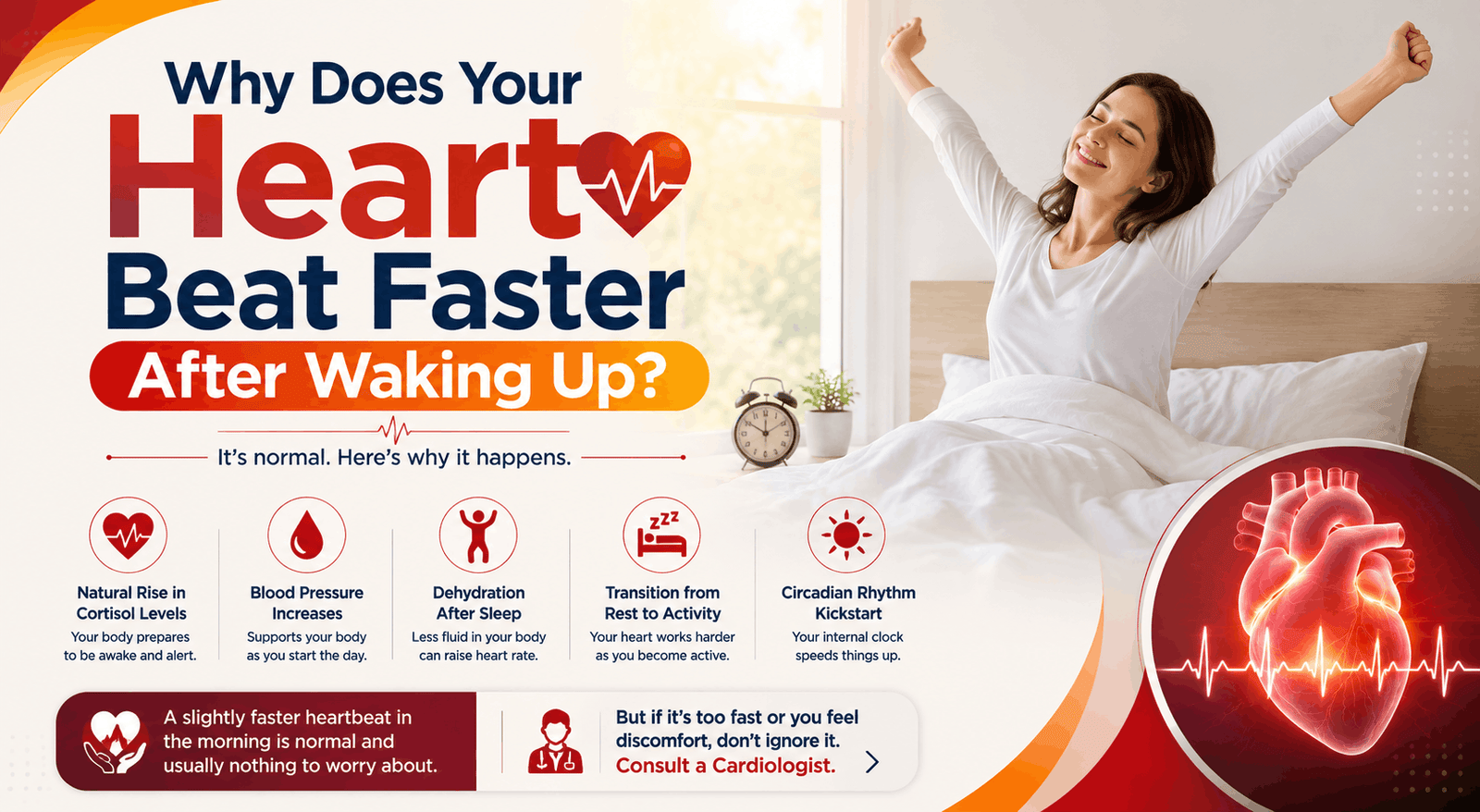
Why Does Your Heart Beat Faster After Waking Up?
Have you ever opened your eyes in the morning and noticed that your heart is beating faster than usual? You may feel a sudden pounding, fluttering, or racing sensation in your chest. In many cases, this can happen because your body is transitioning from sleep to wakefulness. However, repeated or uncomfortable episodes should not always be ignored.
If you are wondering, Why Does Your Heart Beat Faster After Waking Up?, the answer can range from normal morning changes and stress to dehydration, poor sleep, caffeine, or an underlying heart condition. Understanding the possible causes can help you know when medical advice is needed.
Is a Faster Heartbeat After Waking Up Normal?
Your heart rate changes throughout the day. During sleep, your body is generally relaxed, so your heart rate may be lower. When you wake up, your nervous system becomes more active, your blood pressure starts adjusting, and your body prepares for movement.
Getting out of bed can also temporarily increase your heart rate. This is because your heart has to adjust to the change from lying down to standing.
A brief increase that settles within a few minutes is often not a reason for concern. However, if your heartbeat remains fast, becomes irregular, or happens frequently, it is worth discussing with a doctor.
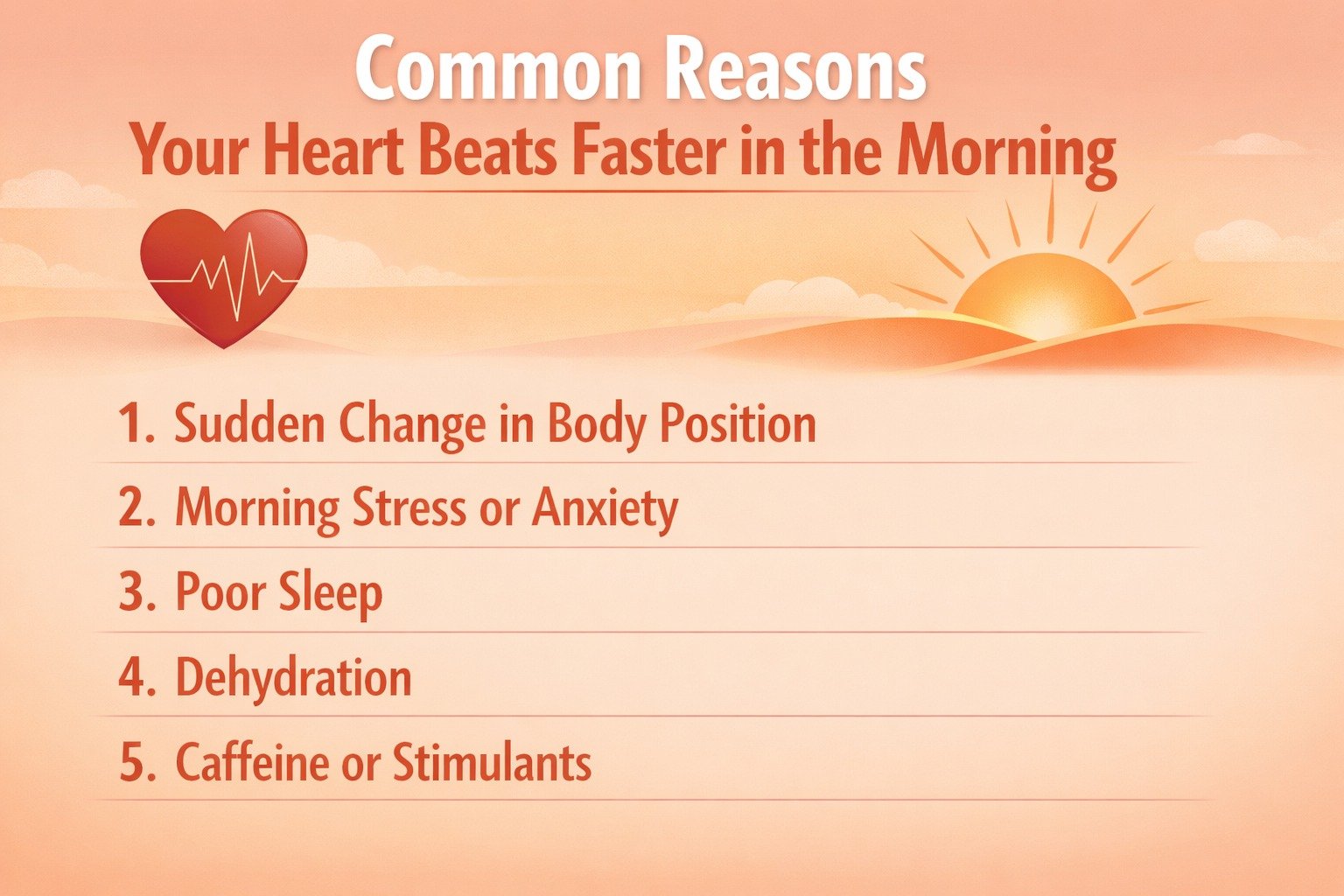
Common Causes: Why Is Morning Blood Pressure Sometimes Higher Than Usual?
1. Sudden Change in Body Position
Moving quickly from lying down to standing can temporarily make your heart beat faster. Your body needs to adjust blood circulation and maintain adequate blood flow to the brain.
Try sitting on the edge of the bed for a few seconds before standing up. This may help your body adjust more gradually.
2. Morning Stress or Anxiety
Stress hormones can increase your heart rate. Some people wake up thinking about work, responsibilities, appointments, or other concerns, which can trigger a racing heartbeat.
If your heart tends to race during stressful mornings but settles once you relax, anxiety or stress may be contributing to the sensation.
3. Poor Sleep
A disturbed sleep schedule or insufficient sleep can affect your body’s normal stress response. You may wake up feeling tired, restless, or aware of your heartbeat.
Maintaining a consistent sleep routine and getting adequate rest can support overall cardiovascular health.
4. Dehydration
You normally go several hours without drinking water while sleeping. If you are already dehydrated, your heart may need to work harder to maintain circulation.
Drinking sufficient water throughout the day and staying hydrated, particularly during hot weather, can be helpful.
5. Caffeine or Stimulants
Your morning tea or coffee may also contribute to a faster heartbeat. Caffeine can cause noticeable palpitations in some people.
Nicotine, energy drinks, and certain medicines can also affect heart rate. If you repeatedly notice symptoms after consuming these substances, discuss the patt
Can a Fast Morning Heartbeat Be Linked to a Heart Condition?
Sometimes, a fast heartbeat may be associated with an underlying heart problem. An abnormal heart rhythm, for example, can cause sensations such as racing, pounding, fluttering, or skipped beats.
Some people with heart valve disease may also experience symptoms such as palpitations, tiredness, breathlessness, or dizziness.
This does not mean that every morning palpitation is caused by heart disease. Several non-cardiac conditions can produce similar symptoms. A proper medical assessment is therefore more useful than trying to identify the cause yourself.
If you are concerned about recurring symptoms, consulting a Heart Specialist can help determine whether further cardiac evaluation is necessary.
What About Aortic Valve Problems?
The aortic valve plays an important role in controlling blood flow from the heart to the rest of the body. When this valve becomes significantly narrowed, a condition known as aortic stenosis can develop.
People with significant valve disease may experience symptoms such as:
Shortness of breath
Chest discomfort
Dizziness
Fatigue
Reduced ability to exercise
Palpitations
Treatment depends on the severity of the valve problem, the patient’s symptoms, age, overall health, and other medical factors.
For selected patients with severe aortic valve disease, a minimally invasive treatment called TAVI may be considered.
What Is TAVI?
TAVI stands for transcatheter aortic valve implantation It is a procedure in which a new valve is delivered through a catheter and positioned within the diseased aortic valve.
The procedure is also commonly known as TAVR, or transcatheter aortic valve replacement.
People researching TAVI in Thane should first understand that TAVI is not a treatment for every type of heart problem. It is primarily considered for suitable patients with certain forms of aortic valve disease.
A specialist evaluates the patient’s heart condition before deciding whether a TAVI procedure in Thane or another treatment approach is appropriate.
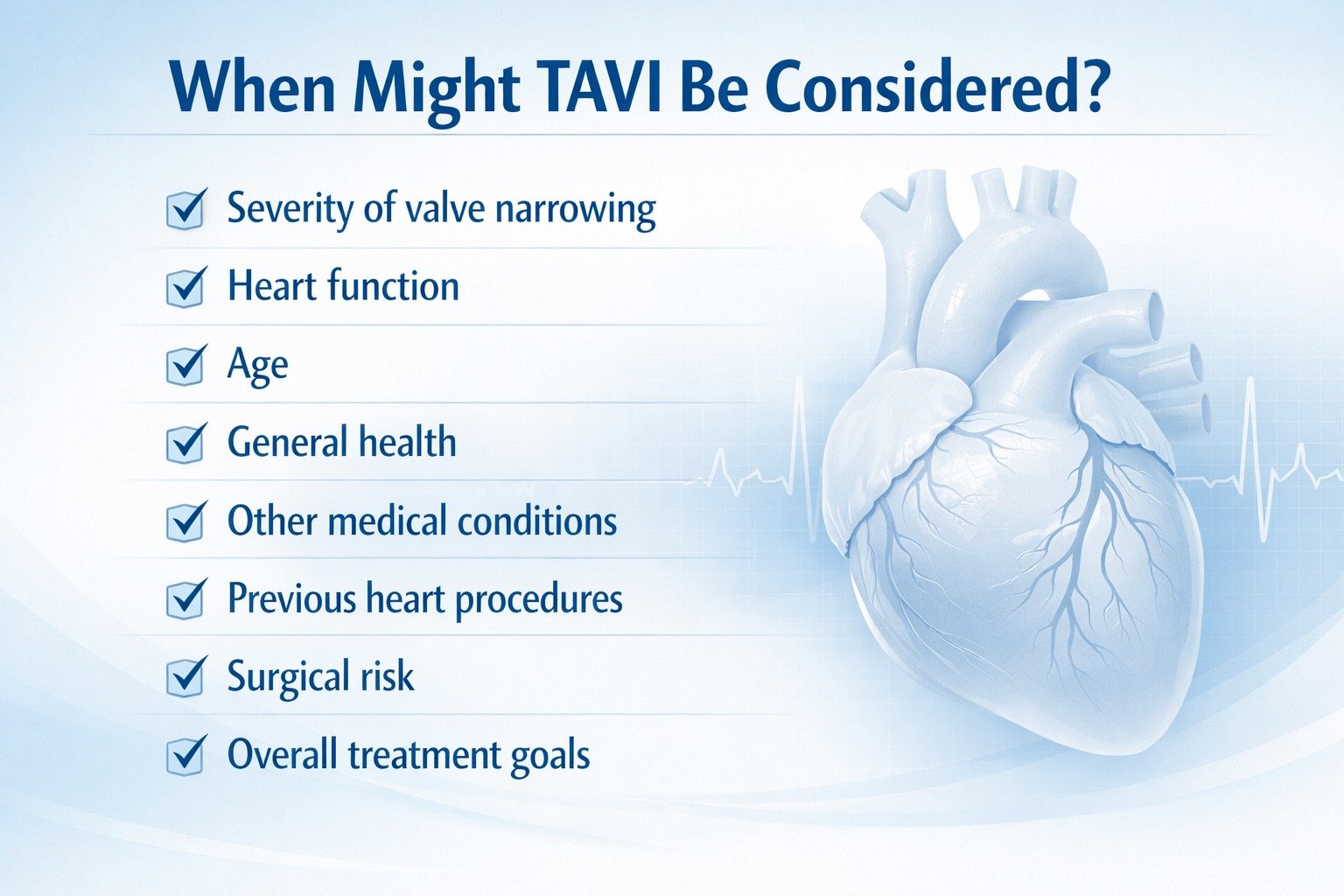
When Might TAVI Be Considered?
TAVI may be considered for selected patients with severe aortic stenosis. The decision is usually based on a detailed assessment rather than symptoms alone.
Doctors may evaluate:
Severity of valve narrowing
Heart function
Age
General health
Other medical conditions
Previous heart procedures
Surgical risk
Overall treatment goals
For an individual searching for a TAVI valve procedure in Thane the first step should be a consultation and appropriate diagnostic testing.
TAVI and TAVR: Are They Different?
You may come across the terms TAVI and TAVR while researching valve treatment. Both refer to the same general type of transcatheter treatment for a diseased aortic valve.
The terminology may vary between hospitals and countries. Therefore, someone searching for a TAVI TAVR procedure in Thane is generally looking for information about transcatheter aortic valve replacement.
The appropriate treatment should always be decided after an individual cardiac evaluation.
Choosing a TAVI Specialist
If you have been diagnosed with aortic valve disease, choosing an experienced medical team is important. Patients looking for a TAVI Specialist in Thane should consider the doctor’s experience, hospital facilities, cardiac team, diagnostic support, and follow-up care.
Someone searching specifically for a TAVI Specialist Doctor in Thane should not make a decision based only on procedure cost or online rankings. Understanding your diagnosis and treatment options is more important.
Your doctor can explain whether a transcatheter procedure is appropriate or whether another treatment would provide better results for your condition.
How Much Does TAVI Cost?
The TAVI Surgery Cost in Thane can vary significantly from patient to patient.
The overall expense may depend on factors such as:
Type of valve used
Hospital facilities
Diagnostic tests
Doctor and cardiac team charges
Length of hospital stay
Patient’s overall medical condition
Additional treatment requirements
Therefore, it is difficult to provide one fixed price without evaluating the individual case.
If you are comparing a TAVI Hospital in Thane consider the complete treatment setup rather than focusing only on the quoted procedure cost.
When Should You See a Doctor for a Fast Heartbeat?
Occasional brief palpitations may not always indicate a serious problem. However, medical evaluation is advisable if your symptoms:
Happen frequently
Last for several minutes
Become progressively stronger
Feel irregular
Occur with dizziness
Are associated with breathlessness
Occur with chest discomfort
Cause fainting or near-fainting
People with an existing heart condition should be particularly careful about new or worsening symptoms.
If a fast heartbeat occurs together with severe chest pain, significant breathing difficulty, fainting, or other serious symptoms, seek urgent medical attention.
What Can You Do to Reduce Morning Palpitations?
If your symptoms are related to lifestyle factors, some simple habits may help:
Wake up slowly: Sit for a moment before standing.
Stay hydrated: Drink adequate fluids throughout the day.
Limit excessive caffeine: Reduce coffee, tea, energy drinks, or other stimulants if they trigger symptoms.
Improve sleep: Follow a regular sleep schedule.
Manage stress: Deep breathing, relaxation exercises, and regular physical activity may help.
Track your symptoms: Note when the fast heartbeat happens, how long it lasts, and whether you had caffeine, poor sleep, stress, or other possible triggers.
However, lifestyle changes should not replace medical evaluation when symptoms are persistent or concerning.
Conclusion
A faster heartbeat after waking up can happen for many reasons, including normal changes after sleep, standing up quickly, stress, dehydration, inadequate sleep, or caffeine. In some cases, however, recurring palpitations can be associated with an underlying heart or valve condition.
If your symptoms are frequent, prolonged, irregular, or accompanied by chest discomfort, dizziness, breathlessness, or fainting, consult a qualified heart specialist.
For patients diagnosed with significant aortic valve disease, treatments such as TAVI may be considered when medically appropriate. Anyone researching TAVI Surgery in Thane or related valve treatment should first undergo a proper cardiac assessment and discuss all available options with an experienced specialist.
For additional cardiac surgical guidance, you can also consult a Heart Surgeon